How Local History Gets Recorded: Archives, Photos and Oral Histories Explained
A practical guide to how local history is preserved through archives, photographs and recorded memories, and how residents can add their own pieces to the record.
Walk down any high street and you are walking through layers. The bakery that was a bank, the pub that was a coaching inn, the row of cottages built for workers at a mill nobody under fifty remembers. Most of that history is not written down in a grand book. It sits in a county record office, in a shoebox under someone's bed, and in the memory of the woman two doors down who has lived on the street since 1961. All three are part of the same record, and all three are fragile.
Understanding where local history lives, and how ordinary people add to it, is less mysterious than it sounds. It comes down to three things: archives, photographs and oral histories.
Where local records actually live
When people say "the archives", they usually mean a record office. Most counties and many large towns have one, usually run by the local authority or a university. These are the places that hold parish registers, tithe maps, school log books, council minutes, hospital records, estate papers, planning files and thousands of deeds and letters that nobody has looked at in decades.
Beyond the official record office, local history is scattered across:
- Local studies libraries — often inside the main town library, holding newspapers on microfilm, directories, maps and cemetery records.
- Museums and heritage centres — usually with a document collection that is not on display.
- Church and chapel archives — baptism, marriage and burial records, plus minutes of parish meetings.
- University special collections — business papers, estate records and personal correspondence.
- Community groups and history societies — the people most likely to know which house on your street had the fire.
A useful first move is to search the national archive discovery catalogue, which lists holdings from hundreds of record offices, then to ring your local record office directly. Staff there are used to enquiries that begin, "I'm not sure if this is the right place, but…" It usually is.
Photographs: the most fragile part of the record
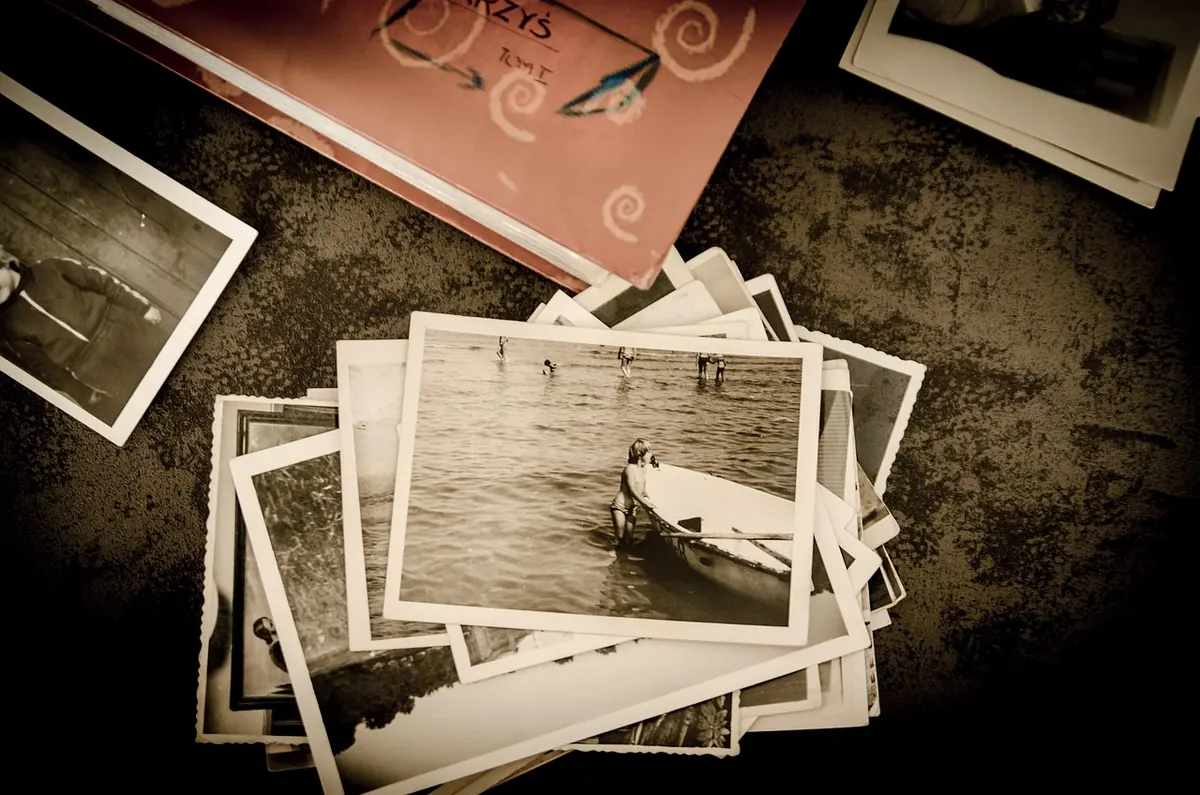
Photographs are the part of local history most likely to be lost, and most likely to be found. Family albums drift through house clearances, car boot sales and charity shops. A photograph of a street in 1954, taken from an upstairs window, can show buildings that were demolished, shop signs, tram lines, and a way of dressing that no written source captures.
What makes a photograph useful
A picture without information is a puzzle, not a record. The details that matter are: who or what is in it, roughly where, and roughly when. If you know the year, say so. If you are guessing, say that too. A pencilled note on the back — "Market Street, looking towards the church, about 1962, Mum third from left" — turns a snapshot into evidence.
How to look after them
- Store prints flat, in acid-free sleeves, away from damp, sunlight and hot lofts.
- Handle by the edges and avoid touching the surface.
- Label with a soft pencil, not ink, and write on the sleeve rather than the print where possible.
- Scan at a good resolution for sharing, but keep the original as the original.
- If you lend anything to a display, get a receipt and a named contact.
Oral histories: recording what nobody wrote down
Much of everyday life never made it into documents. Shift patterns, corner shop credit, how a street celebrated a coronation, the route children took to school, what a factory floor sounded like — these survive only in memory. An oral history is simply a recorded conversation with someone about their own experience, kept so that others can hear it later.
You do not need professional equipment. A phone will do, placed on a table between you rather than held up like a microphone. Record somewhere quiet, check the battery, and test the first thirty seconds before you commit to an hour.
How to run a good interview
- Ask permission to record, and explain what will happen to the file.
- Start with easy ground: where they were born, where they went to school, what their first job was.
- Ask open questions — "What was a Saturday like when you were ten?" beats "Did you enjoy your childhood?"
- Follow the interesting threads rather than your list of questions.
- Let silences sit. The pause is often where the detail arrives.
- Finish with names, dates and places spelled out, so future listeners can find them.
Then do the boring but vital bit: label the file with the speaker's full name, the date, and the interviewer's name, and back it up somewhere other than the device you recorded it on.
How residents can contribute
Record offices and local studies libraries accept donations, but they can only keep what fits their collecting policy, and they rarely have the staff to chase paperwork. A few practical points make the difference between a welcome gift and an awkward one.
Contact before you turn up with four boxes. Ask what they hold already, and whether they would like a digital copy instead of the original. If you are donating, you will usually be asked to sign a transfer of ownership form, which lets the archive care for, copy and show the material. Think that through before you sign. If you would rather keep the originals, offering high-quality scans is a perfectly good alternative.
If you want to do more than donate, plenty of local groups need help: cataloguing, transcribing, indexing photographs, updating a website, or simply typing up handwritten notes. Volunteering a few hours a month puts you in touch with people who know the area's history better than anyone.
A short practical checklist
If you have a box in the loft and a spare afternoon, this is a sensible order of work:
- Sort by type: photographs, documents, objects, recordings.
- Write down what you know about each item while you still can, including who told you.
- Scan or photograph anything fragile, and keep a copy somewhere safe off-site.
- Ring your local record office or local studies library and ask what they want.
- Record an older relative or neighbour before the chance passes. Ask before you press record.
- Share what you find with a local history society, so someone else does not repeat the work.
Local history is not built by experts alone. It is built by people who notice something, write it down, and hand it on. A single labelled photograph, or one hour of recorded conversation, can be the only surviving account of a street, a trade or a day that mattered to someone. That is worth a modest amount of effort.
Photo: jarmoluk / Pixabay